Strategy & roadmap
Prioritise the work against business needs, available budget and current constraints.
CTO & technology advisory
Technical leadership and an in-house delivery team, aligned with your business.
Get senior input on the decisions that shape your software, budget and delivery priorities.

Senior input. Practical follow-through.
Make the trade-offs clear before you commit. We help management teams assess the options and turn agreed priorities into a workable delivery plan.
Prioritise the work against business needs, available budget and current constraints.
Review applications, dependencies and integration choices before making changes.
Keep progress, unresolved decisions and project risks visible to management.
Assess the codebase, supplier proposals and maintenance obligations.
Review access, data handling and technical controls with your governance team.
Plan the systems, technical roles and capacity needed for your next stage.
From ambition to delivery
Connect the roadmap to the work. Bring strategy, architecture and delivery into one engagement, with clear responsibilities and review points.
A plan your team can act on.
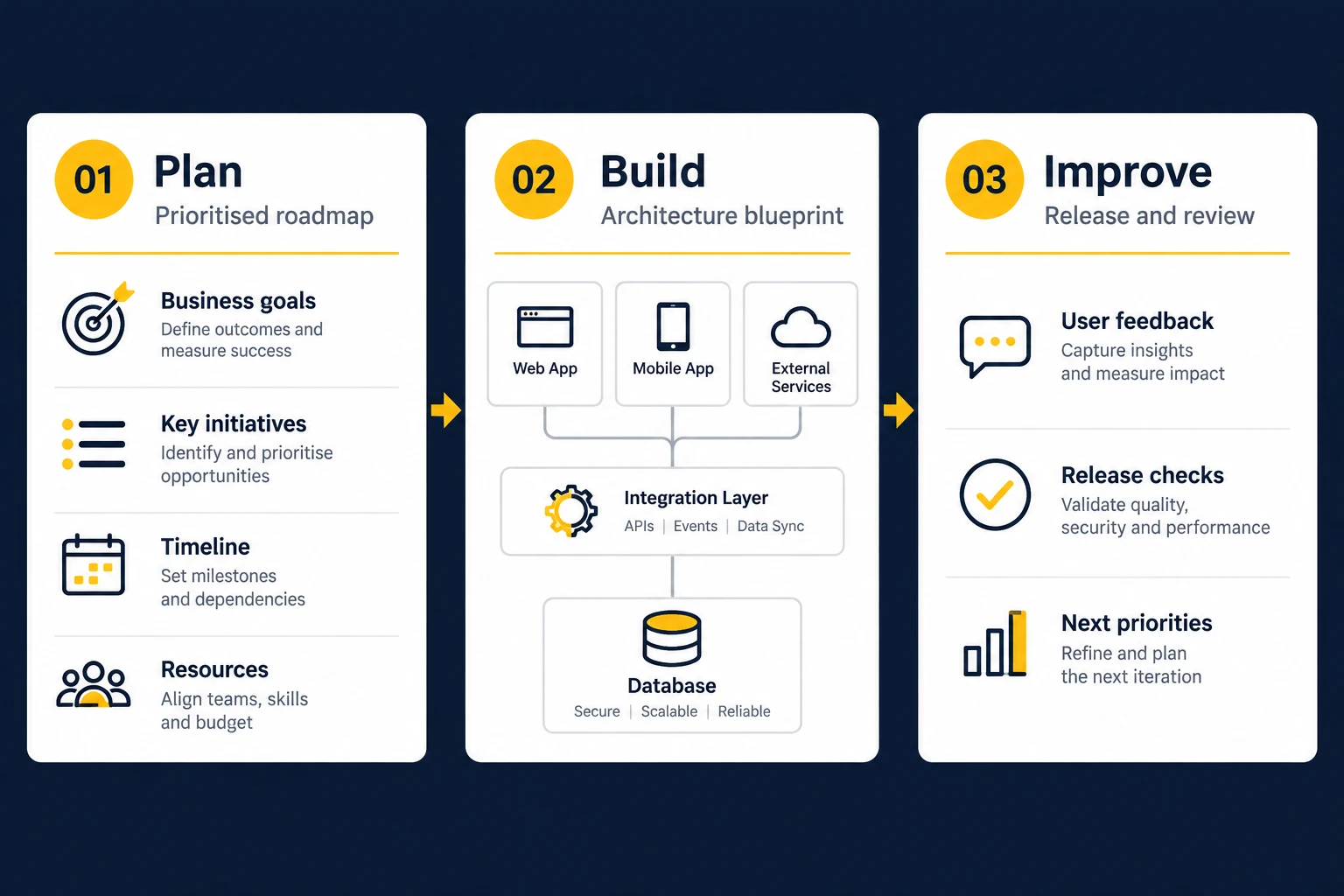
The questions change as a business grows. Shape the engagement around the decisions in front of you.

Define the first product, assess build options and agree what belongs in the initial release.

Review disconnected systems and plan improvements around day-to-day operations.

Resolve architecture and delivery constraints before expanding the roadmap.

Get an independent view of the systems, team and commitments you are taking on.

Work alongside your team
Get senior technical input at the level your business needs, with an agreed scope, cadence and clear points of contact.
Agree a monthly retainer or a focused engagement around a specific decision.
Set the priorities, deliverables and review schedule before work starts.
Collaborate with your developers and suppliers, with clear ownership of the work.
A shared view of the problem, a clear plan and regular decisions about what comes next.
Review your goals, systems, team and current delivery commitments.
Agree the roadmap, priorities, responsibilities and measures of progress.
Guide implementation and review the work against the agreed scope.
Revisit risks and priorities as your business and product develop.
Start with the decision your organisation needs to make: retain or replace a system, choose a vendor, define a product release or review a delivery risk.
Bring the objectives, constraints, architecture notes, vendor proposals and known issues. Identify assumptions that still need evidence rather than treating them as settled facts.
An agreed review can cover options, dependencies, risks and recommended next steps. Specify the written deliverable and the questions it must answer before the engagement starts.
Name the people who approve investment and accept technical work. Define whether implementation oversight is included or needs a separate scope, alongside any ongoing review cadence.
A fractional CTO helps business leaders make technology decisions without hiring a full-time CTO. UNO's advisory work can cover architecture, development priorities, supplier proposals and delivery risks. The engagement focuses on the decisions you need to make and who will carry them out.
Yes. We can review plans and technical decisions with your developers and suppliers. The engagement defines who makes decisions, who delivers the work and when reviews happen, so advice fits the team's day-to-day responsibilities.
Development is included only when it is part of the agreed proposal. An advisory engagement may focus on a system review, roadmap or delivery oversight. Any implementation work, maintenance and operational support should have a clear scope and budget.
Technology advisory engagements with UNO start from RM20,000. The scope depends on what needs reviewing, such as architecture, supplier proposals or a delivery roadmap, and how long ongoing oversight continues. Development work is included only when it is part of the agreed proposal.
Bring the business decisions you need to make, an overview of your systems and any current supplier proposals. Known problems, upcoming deadlines and budget constraints are useful too. We can then identify which documents and technical access are needed for a focused review.
A useful roadmap identifies the business problem, the proposed work, dependencies, budget assumptions and the person responsible for each decision. It should distinguish urgent maintenance from new features. Review dates matter because priorities can change when testing, supplier access or customer feedback reveals new information.
A review can compare what each proposal includes, assumes and leaves to your team. Look at integration work, data migration, testing, ownership, running costs and exit arrangements alongside the build price. The review should produce specific questions for each vendor and explain the trade-offs behind a recommendation.
Let's build what's next
Tell us what you are planning, what is holding it up and where you need a second opinion.