Customer Loyalty Application

Know who your regulars are, and give them a reason to come back.

A stamp card tells you nothing. A loyalty app tells you who bought, how often, what they chose and when they stopped — and lets you do something about it while they are still a customer.

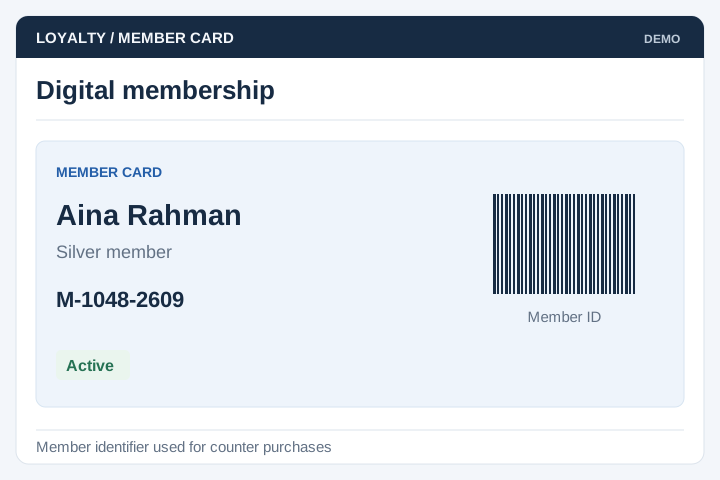
Member
identity
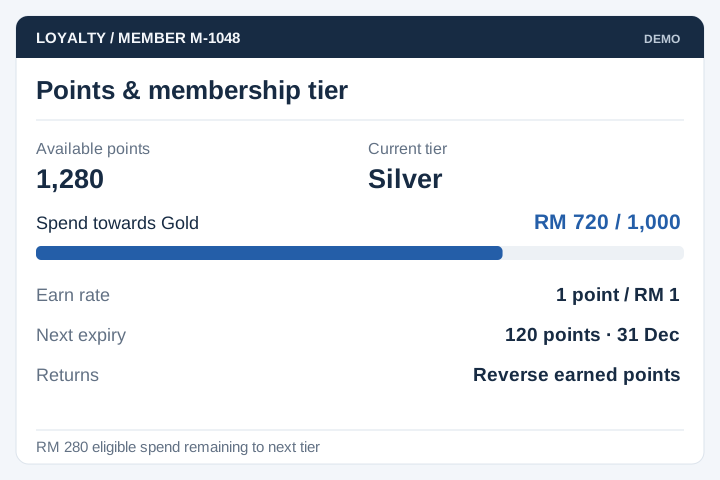
Points
and tiers
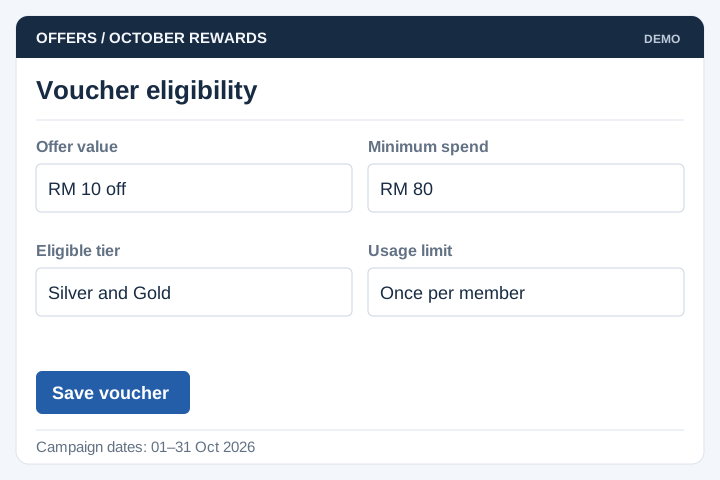
Rewards and
vouchers
Behaviour
reporting
Member sign-up and community landing screen from a loyalty platform built by UNO
Member standings ranked by activity, with location and engagement counts
Points earnedCredited at the counter
Reward unlockedVoucher issued to the member
Lapsing memberNo visit in ninety days
The problem

You know your takings. You don't know your customers

Most businesses can tell you what they sold last month to the ringgit, and almost nothing about who bought it. That gap is where the marketing budget goes to die.

  • Sales are counted, customers are not — the same person could be in five times a week or once a year.
  • Stamp cards get lost, forged and forgotten, and prove nothing afterwards.
  • Discounts go to everyone including the people who would have paid full price.
  • A regular who stops coming is never noticed, because nobody is counting the gap.
  • The customer list lives with the payment terminal or the delivery platform, not with you.
Built for repeat business

Businesses that live on customers coming back

Loyalty only pays where repeat purchase is realistic. If someone buys from you once in a decade, no amount of points will change that — but if they could come weekly, the difference between eight visits and twelve is your year.

F&B and cafés

High frequency, small basket, where a free tenth coffee genuinely changes behaviour.

Retail chains

Members identified at the till across branches, with one balance wherever they shop.

Salons, spas & wellness

Prepaid packages and treatment courses, where the balance is the reason to return.

Service & workshops

Servicing intervals where the reminder matters more than the discount.

Community brands

Enthusiast groups where standing and recognition motivate more than money off.

Malls & multi-tenant

One programme across many merchants, with points earned in one shop and spent in another.

Decide what the programme is for before you decide what it does. Rewarding people who were coming anyway just discounts your best customers. A programme is worth building when you want to identify customers, bring lapsed ones back, or move spending toward particular products or quieter hours.

If your point-of-sale already offers a loyalty module and a simple points scheme is all you need, use it. Custom pays off when the rules are yours — tiers, partner redemption, packages, or points that have to work across systems that were never designed to talk.

From sign-up to return visit

How a member moves through the programme

Six steps. Step two is the one that decides whether the programme works — if identifying a member at the counter is slow, staff stop asking.

Join

Sign-up in the app or at the counter, with consent for marketing captured properly.

Identify

A QR code, phone number or card links the transaction to the member in seconds.

Earn

Points, stamps or spend credited by your rules, including bonuses on chosen items.

Redeem

Rewards claimed in the app or at the till, with the balance updated immediately.

Re-engage

Members who have gone quiet get a reason to return before they are gone for good.

Measure

Visit frequency, basket size and lapse rate, compared against non-members.

Points are a liability, not a marketing line. Unredeemed balances sit on your books and someone will eventually ask what they are worth, so the reporting has to answer that from day one.

Core modules

Main modules and functions

Most brands start with enrolment, identification and earning. Tiers, campaigns and partner redemption come once there are enough members for them to mean anything.

Members & enrolment

Sign-up in app or in store, profile, marketing consent with a date, and account merging.

Identification

QR code, phone number or physical card, working fast enough for a queue at lunchtime.

Earning rules

Points per ringgit, stamps per visit, bonus items, double-point hours, expiry rules.

Tiers & status

Levels with their own benefits, qualification periods and a downgrade rule that is actually enforced.

Rewards catalogue

What points buy, with stock limits, member eligibility and redemption at till or in app.

Campaigns & vouchers

Targeted offers by segment, birthday rewards, win-back vouchers with a redemption window.

Partners & multi-outlet

Earning and redemption across branches or partner merchants, with settlement between them.

POS & payment link

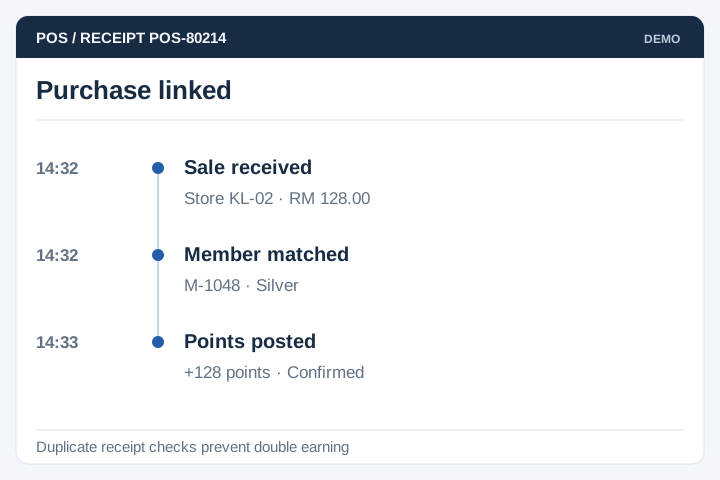
Integration with the till or payment terminal so staff do not key a second transaction.

Reports

Active members, frequency, basket uplift, points liability, redemption rate and lapse rate.

Rewards and giveaway offers presented to members
From a live build

Screens from a member platform we built

From Yelo, a community platform where members build standing on a leaderboard, unlock features as they participate, and claim partner giveaways. The reward mechanics are the same ones a retail programme uses. Member handles shown are public usernames.

Member sign-up panel with social login options on the community landing page
Enrolment Joining takes one screen — anything longer and people abandon it at the counter.
Leaderboard ranking members by activity with location and engagement counts
Standing & ranking Recognition works on some audiences better than discounts do, and costs nothing to give.
Rewards and giveaway offers available to members
Rewards What the points are actually for, kept visible so members know what they are working toward.
Mobile app screens showing member feed, clubs and offers
In the pocket The programme lives on the phone, which is the only place a member will check a balance.
Implementation

Typical implementation

Six stages. The first one is a commercial exercise rather than a technical one, and getting it wrong is expensive to undo.

Programme design

What a point is worth, what it costs you, and what behaviour you are paying for. We model the liability before a line of code is written.

Output: programme rules with costed scenarios

Customer data audit

Existing lists from the till, delivery platforms and past campaigns, checked for duplicates and for whether you have consent to contact them.

Output: import list with consent status

Design & sign-off

Screen-by-screen design of the member app and the counter flow, tested against how long a queue will tolerate.

Output: signed-off screens, build schedule

Build in stages

Enrolment, identification and earning first, so one outlet can run the programme before tiers and campaigns exist.

Output: test system, updated fortnightly

Pilot outlet & UAT

One branch for a month, watching how long identification takes at peak and whether staff actually ask.

Output: pilot findings, signed UAT

Rollout & launch

Branch by branch, with counter staff briefed on what to say. The programme lives or dies on that sentence.

Output: live programme, SOP, support window
Timeline

About three months, plus a pilot

For a programme with a member app, counter identification and a rewards catalogue. A points scheme with no app and no POS link is closer to seven weeks.

Month 1Month 2Month 3Month 4
Programme design
Customer data audit
Design & sign-off
Core build
POS link, tiers, campaigns
Pilot outlet
Rollout by branch

The pilot is not optional padding. A month in one outlet tells you whether staff remember to ask, whether identification survives a lunch rush, and whether the reward is worth having — all cheaper to find out in one branch than in thirty.

Client feedback

From a consumer brand we've worked with

We have worked with Uno.com.my for our very first retail site and the amount of effort put in by the team has made the website our pride and it has ever since improved traffic. The services provided by the Uno to us top-notched, quick and efficient! Thank you, Uno!
Ee Laine Hilton KL